
If you’re starting to notice more wasps around your home, you’re probably wondering when they actually start building nests — and whether you should be worried yet.
In the UK, wasps follow a very predictable seasonal pattern. Knowing when they build nests can help you spot a problem early and deal with it before it gets out of hand.
When Do Wasps Start Building Nests?
Wasps typically begin building nests in early spring, usually between March and May.
This is when queen wasps come out of hibernation. After spending the winter hiding in places like lofts, sheds, or wall cavities, they emerge as the weather starts to warm up.
At this stage, the queen starts building a small nest on her own and begins laying eggs.
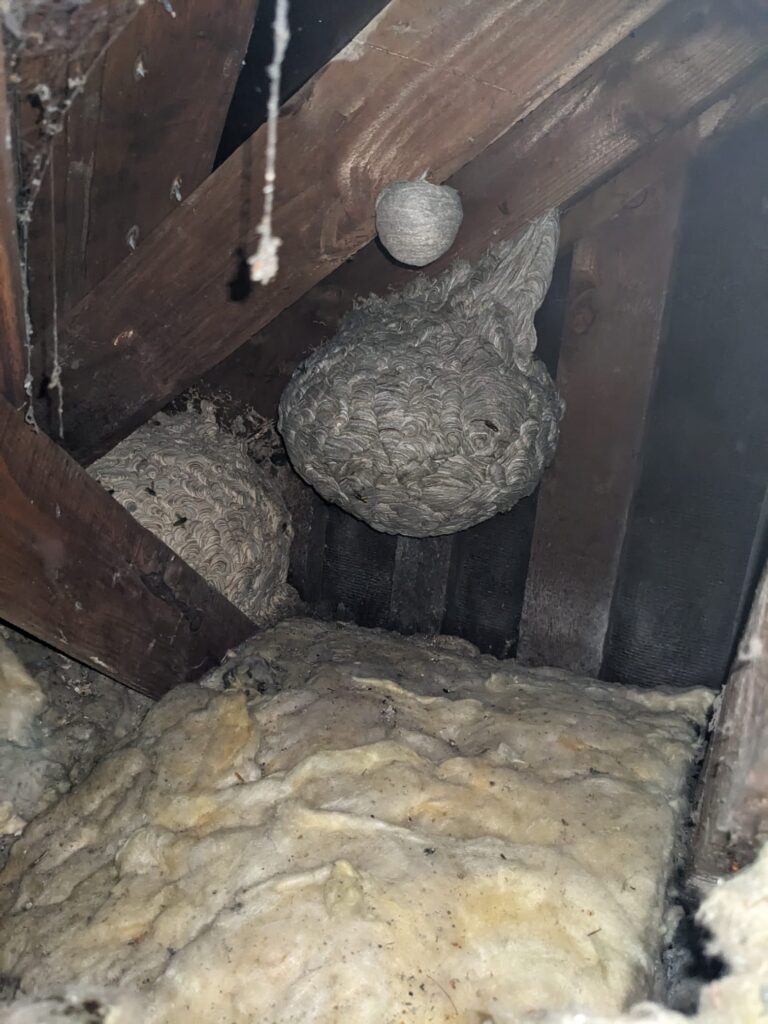
Early nests are often no bigger than a golf ball, so they can be easy to miss.
What Happens After the Nest Starts?
Once the first batch of worker wasps hatch, they take over building the nest.
This is when things start to escalate.
Through late spring and into summer, the nest grows quickly. By July and August, a single nest can contain thousands of wasps.
This is when most people start noticing increased activity around their home.
When Are Wasps Most Active?
Wasp activity usually peaks between July and September.
During this time, nests are at their largest and wasps are actively searching for food.
You’re more likely to see them around:
- Bins
- Outdoor eating areas
- Lofts and rooflines
- Garden structures like sheds and fences
This is also when they can become more aggressive, especially if their nest is disturbed.
Early Signs of a Wasp Nest
Spotting a nest early makes a big difference.
Look out for:
- Wasps regularly entering and leaving the same spot
- A small papery structure in a loft, shed, or under eaves
- A low but steady number of wasps in one area
If you notice this in spring, there’s a good chance a nest is just getting started.
Should You Remove a Wasp Nest Early?
Yes — dealing with a nest early is always easier.
A small nest in spring is much quicker and safer to remove than a large, active nest in summer.
If left untreated, what starts as a minor issue can quickly turn into a serious infestation.
If you’re unsure what you’re dealing with, it’s always best to get advice before attempting anything yourself.
You can read more about pricing and what’s involved here:
How much does wasp nest removal cost in the UK?
Professional Wasp Nest Removal
If you’ve spotted signs of a nest, it’s best to act quickly.
At Ian Smith Pest Control, I provide fast, discreet wasp nest removal across Lancashire and Greater Manchester.
I use an unmarked vehicle and offer quick response times, so you can get the problem sorted without drawing attention.
You can find out more or get in touch here:
Wasp Nest Removal Services