
Wasp Control Bolton – Signs You Have An Active Wasp Nest
Summer is traditionally one of the busiest times of year for wasp control.
As wasp colonies grow larger, homeowners begin noticing increased activity around their properties. What may have started as a single queen wasp building a tiny nest in spring can quickly develop into a colony containing thousands of wasps.
I provide professional wasp control in Bolton and regularly help homeowners, businesses and landowners deal with active wasp nests throughout the summer months.
How A Wasp Nest Develops
Every nest starts with a single queen wasp.
After surviving winter hibernation, the queen begins constructing a small nest and laying her first eggs. Once the first worker wasps hatch, they take over nest construction while the queen focuses on reproduction.
As the summer progresses, colonies can grow rapidly and become far more noticeable.
You can learn more about this process in my guide on how fast wasps build nests.
Signs You Have An Active Wasp Nest
Many people never actually see the nest itself.
Instead, they notice increasing numbers of wasps around a particular area.
Common signs include:
- Wasps repeatedly entering and leaving the same location
- Increased activity around rooflines
- Wasps entering loft spaces
- Activity around sheds, garages and stables
- Buzzing sounds in walls or ceilings
- Large numbers of wasps gathering around entry points
If you’ve noticed any of these signs, there is a good chance a nest is nearby.
My guide on where wasps nest around your home explains the most common nesting locations.
Where Wasps Commonly Build Nests
Over the years I’ve removed wasp nests from all kinds of locations across Bolton and the North West.
Common nesting sites include:
- Lofts and roof voids
- Wall cavities
- Sheds and garages
- Stables and farm buildings
- Chimneys
- Under roof tiles and fascia boards
- Garden outbuildings
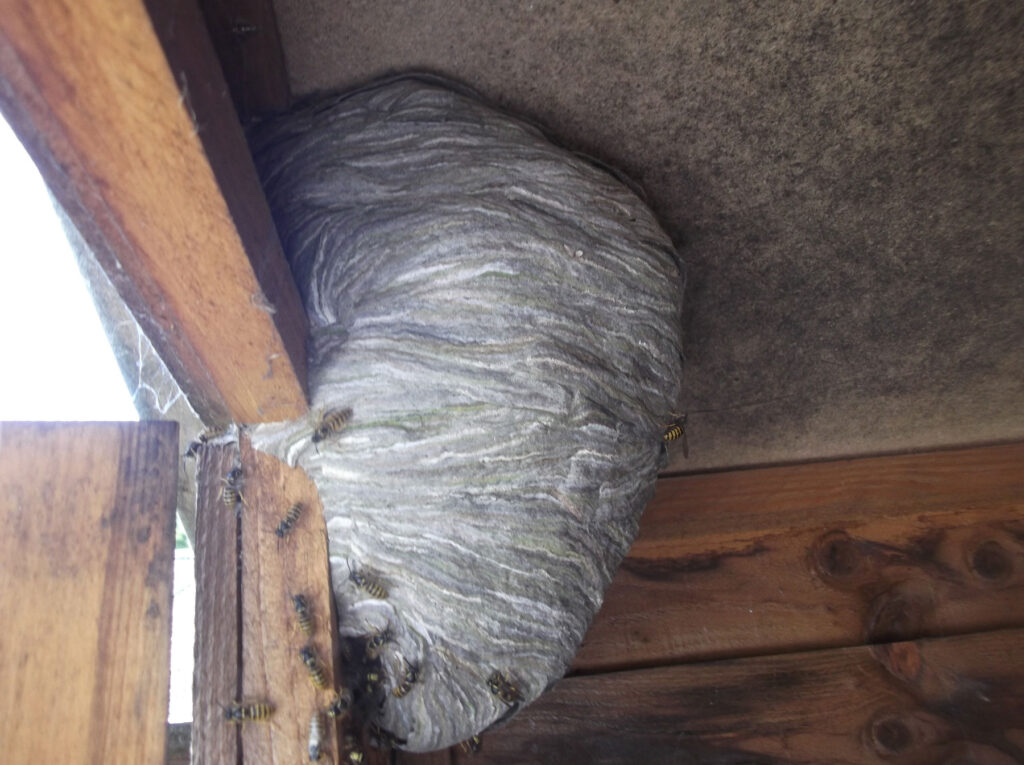
A nice big wasp nest inside a stable.
Many of these locations provide shelter from the weather and protection from predators, making them ideal nesting sites.
Inside A Wasp Nest
One of the most fascinating things about wasp nests is their construction.
Although they often look like paper, wasp nests are actually made from chewed wood fibres mixed with saliva.
The result is an incredibly lightweight but surprisingly strong structure containing hundreds or even thousands of individual cells.
Even after years of removing nests, it’s hard not to be impressed by how intricate the internal structure can be.
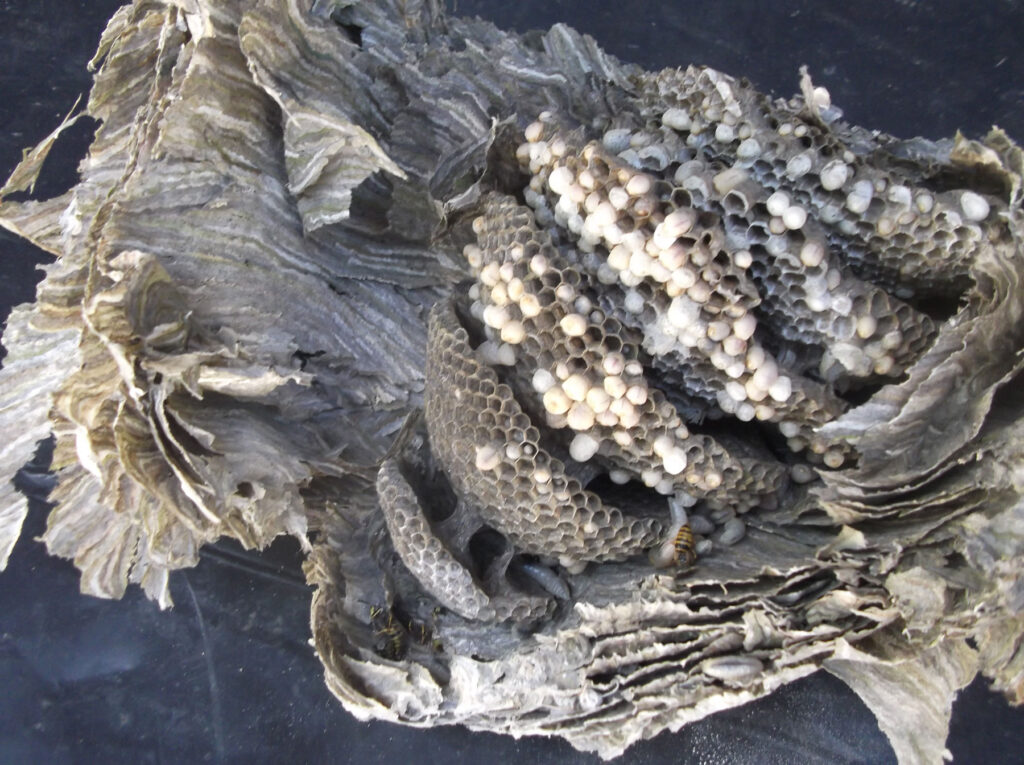
The inside of a wasp nest. Taken out of a stable in Bolton.
Why Wasps Become More Noticeable Later In Summer
As colonies grow, worker wasps spend more time searching for food.
Earlier in the season, wasps primarily collect insects and protein sources for developing larvae. Later in the year they begin seeking sugary foods and drinks.
This is why wasps often become a nuisance around:
- Beer gardens
- Outdoor dining areas
- Picnics
- Fruit trees
- Bins and waste areas
Many people first notice a nearby nest when increasing numbers of wasps start visiting outdoor seating areas.
When Should A Wasp Nest Be Treated?
Not every wasp nest needs removing.
However, treatment is often advisable when:
- The nest is close to a home
- Children or pets are at risk
- The nest is affecting a business
- People regularly use the area
- Someone nearby has an allergy to wasp stings
Professional treatment can usually eliminate the problem quickly and safely.
For more information, visit my wasp control page.
How Much Does Wasp Nest Removal Cost?
One of the most common questions I receive is how much treatment will cost.
The answer depends on factors such as the location of the nest and how easily it can be accessed.
I’ve covered this in more detail in my guide to wasp nest removal costs.
Need Wasp Control In Bolton?
I provide professional wasp nest removal and pest control services throughout Bolton and the surrounding areas.
I also cover Chorley, Preston, Wigan and Blackburn.
If you’re concerned about a wasp nest, call 07821 318954 or visit my contact page for advice and a fast response.